Rabu, 29 Maret 2006

FED'S DECISION

After last nights FED decision to raise interest rate, citing resource utilization and commodity prices as having "the potential to add to inflation pressures." The markets sharply fell and today the market seems to wait what next but we could expect the intrest rate, so what?

Is there a disappointment here? "In any event, the Committee will respond to changes in economic prospects as needed to foster these objectives."
(Federal reserve realease)

Did we expect Bernanke saying the interest rates will never rise in the future again? The FED will raise interst rates wehn they think it is necessary to do so, be it Bernanke or Greenspan. Nothing abnormal.

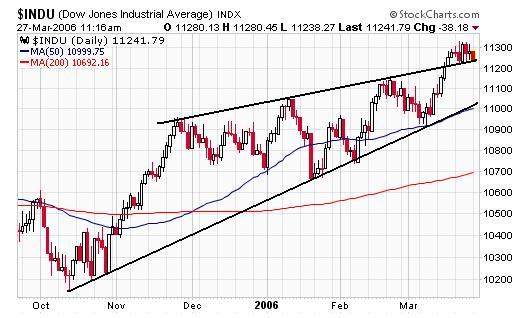
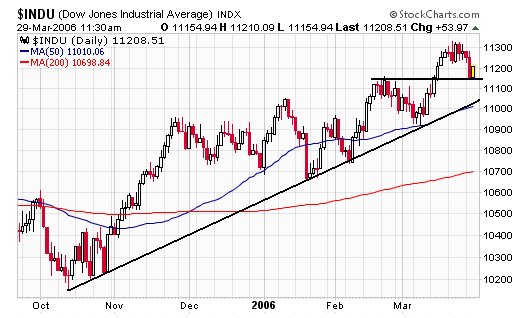
The DOW JONES at outbreak levels but still within the upgoing trend and recovering at the moment. See graph.


Selasa, 28 Maret 2006

Credit Bureasus Release New Credit Scoring System

What's this new VantageScore credit score!

The three major credit bureaus Experian, Equifax and
TransUnion introduced the VantageScore in March 2006
to compete and replace the current FICO score system.

VantageScore has one big thing going for it: It's easy for
consumers to understand. VantageScore scores are on a
scale of 501 to 990. If your score is in the 900s, you have
the credit equivalent of an A and you'll get favorable
interest rates. If your score is in the 800s, that's the
credit equivalent of a B, with slightly less-favorable rates.

The credit bureaus say they've introduced this new
system so that the scores being reported to credit
grantors are consistent and easier to interpret.

But some observers say that the new scoring model
won't change the biggest problem consumers face when
it comes to credit scoring -- inaccurate or incomplete data
in their individual reports

To understand what that means, you need to know that
while we all get a score generated from each bureau,
how those scores are determined can vary greatly. That's
because each bureau uses a different formula to
generate the score it sells to lenders.

The scores under the new system could still cause a huge
spread in scores. Credit scores are generated using
information in your credit files. Each file can have all the
same information or vastly different data.

One creditor may or may not report all your information to
all three bureaus. Or one of your files might be missing
the maximum limit on your credit card, making it appear
as if you are overextended.

The new score was just introduced last week, and
adoption is gradually moving along. The credit bureaus
plan to replace the proprietary scores at their Web sites
with the VantageScore over the next few months, but
right now they're focusing on marketing the score to
lenders.

----------------------------------
For more details and a complete explanation of how the
score works and what to do to improve yours visit:
http://www.credit-repair-specialist.com and
http://www.debt-elimination-program-reviews.com for
the latest updates.

Senin, 27 Maret 2006

FOLLOW THE TRENDS

John Henry discussing about his trading philosophy, claiming no knowledge of the future (nobody does) but allways following the trend.

"I knew I could not predict anything, and that is why we decided to follow trends, and that is why we've been so successful. We simply follow trends. No matter how ridiculous those trends appear to be at the beginning, and no matter how extended or how irrational they seem at the end, we follow trends."


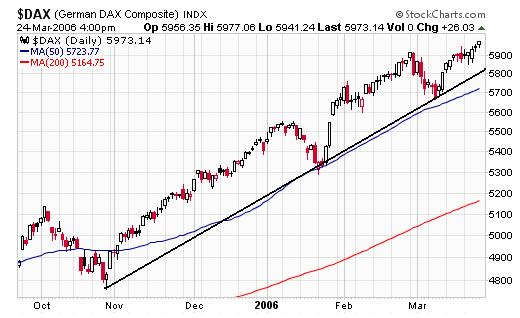
I was thinking about the strong trends we see on the markets these days, despite todays losses, when reading Henry's article. See first the German DAX trending since November of last year, reaching for years high of 6000.

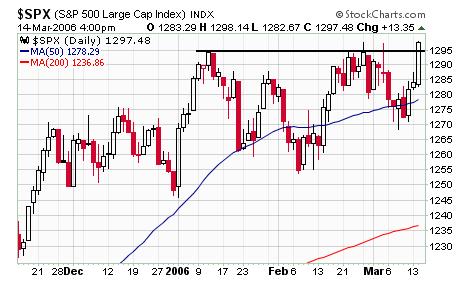
The DOW JONES trending above the narrowing rising channel. Even a correction to 11100 would maintain this existing trend.


Minggu, 26 Maret 2006

BIG DOW FUTURE STARTED TRADING FRIDAY

Last friday the CBOT started trading the big sized DOW future (symbol DD). The multiplier is 25$ so now we have the mini DOW (5$ per point), The DJIA future worth 10$ per point and the big DOW. The big DOW wil only be traded electronically. The contract specifications being the normal ones.

The first day volume was not big: only 246 futures were traded. It will be a product for bigger traders.


Jumat, 24 Maret 2006

GAPS ON THE MINI DOW FUTURE

An email noticed me to a new blog, Short-Term trading. The first postings were about gaps. I tried to comment on it but that somehow it didnot work? So I give the link to the website on my blog and give my comment here.


I looked in the past at openinggaps on the mini DOW future. The first question which arises what defines a gap and when does it happen. Particularly if you take into account that the DOW is electronically traded almost 24 hours a day so the timeframe you take is a little bit arbitrarely chosen.


I decided to take the opening hours of the New York market, eg from 15:30 - 22:00 CET (9:30 a.m. - 4 p.m. in New York). I then defined a gap occurring when at least 10 points big, to take smaller ones is of no use. The stop was set at 20 points (which may be too low).


The backtested trades were opened at 15:30 and were closed at the close of the day before. No trail. I found a disappointing profit per trade of only 5$ but with a Profit/Loss ratio of 2.42 which is very good (giving acurate trades).


Now the site mentioned above drove me back to my data. I will have another look at it, now w with more data and I will take another setup. I will use a bigger stop (1.5 to twice the possible gain) and also vary the minimum gap size.


Selasa, 21 Maret 2006

The First Step To Getting Out Of Debt: Make The Commitment!

These days, getting into debt is easy.

Unfortunately, getting out of debt is not so simple for most
people. But you can do, if you go about it the right way.

The first - and by far the most important step - to getting out
of debt is to MAKE A COMMITMENT!

Personally, I spent years telling myself how much I wanted to
get out of debt. But then something would always happen - a big
expense, a change of jobs, you name it.

And even though I really wanted to get out of debt, I never
made any real progress. Then one day I finally got so
frustrated I said to myself:

"It's now time to do WHATEVER IT TAKES to get myself completely
out of debt!"

And for the first time since I got myself into debt (by maxing
out all of my credit cards trying to start a business) I
finally figured out the true "secret" to getting out of debt:
making the commitment!

So, if you haven't already made a commitment of your own, do it
right now. Decide you're going to do WHATEVER IT TAKES to get
yourself out of debt...and start doing it!

How long will it take you to get out of debt? If you're like
most people (including myself not long ago), too long!

How To Take Action

Once you make this commitment, it's time to take action.

Write down exactly how you plan on getting out of debt. Here
are some questions to ask yourself while developing your plan:

- How can you save money each month?
- What expenses can you eliminate?
- How much more money can you use to pay off your credit card
bills faster?
- How can you make some extra money?
- Have you contacted your creditors to request a lower interest
rate?
- How can you change your spending habits?
- Have you considered professional help - credit counseling,
debt negotiation, bankruptcy - to find out all of your options?

- Are you really committed to getting out of debt?
- When do you want to be completely debt free?

It's a great feeling being completely free of credit card debt.
But it won't start happening until YOU decide to make it happen!


© 2005 Debt-Tips.com


About The Author: Kris Bickell is the owner of Debt-Tips.com, a
helpful site for consumers struggling with credit card debt. For
tips on getting out of debt, repairing your credit, saving
money, and making extra money online, sign up for the free "Get
Out Of Debt Faster" email course at:
http://www.Debt-Tips.com/course.html.

NO REGRETS WITH TRADING

Globetrader is complaining about his trades. He was dissapointed about two trades hitting their stops on the same day. I had comparable feelings last week too.


I don't trade after a certain hour. When in position I close my trade after this hour no matter what because from close watching the BUND I don't expect the future moving much in the last tradinghours. Though being so in most days, after closing my trade the future made a big movement in my direction.


I was only a little dissapointed, I know I traded correctly. There must be no regrets when trading the markets. I closed and thats just it "knowing" that in the next trades the biggest movements occur before the last tradinghours of the day.
At least i hope so.


Nice reading: Personality traits for a trader.


Sabtu, 18 Maret 2006

Your Credit History

Your credit history. Three simple words that can determine the
outcome of our financial success. Your credit history
influences any and all decisions that a company or institution
will make when considering you as a credit risk. Because of its
importance, knowing and understanding what your credit report
says about you is vital.

Your Credit Report

Your credit report is a document that will show your personal
and financial information, good and bad. Your score is based on
this information and is called your FICO score. The higher the
FICO score the better. This information is reported by all
three major credit bureaus, Equifax, Experian (formerly TRW),
and TransUnion. Any time you apply for credit of any kind, the
lender will contact one of these credit bureaus to obtain a
copy of your credit report.

This all sounds pretty technical but what it boils down to is
this, your credit score will influence all future financial
decisions. That is why it is so vitally important that you keep
track of your score and read your report regularly. Mistakes can
and have been made. Keeping track of your report will help you
to find these mistakes and resolve them in a timely manner.

What Your Score Means For You

Pretty much everything. As I mentioned above, your credit score
will influence the decisions that companies make when you apply
for credit. If your credit is less than perfect, you may be
turned down or at least given a higher interest rate than
someone who has a higher score. Problems can stay on your
report for as long as two years even after they have been
resolved.

What Influences Your Score

Your payment history is one of the main influences. Have you
paid your bills on time? If you have routinely been late with
payments, your score will be negatively affected.

How much outstanding debt you have is also a factor. This
includes the outstanding balance on any loans you may have as
well as the credit limits on any credit cards you may have. If
you have multiple credit cards and these cards all have high
credit limits, even if you don't carry a balance on these
cards, the possibility still exists that you will someday
charge all these cards to their limits. This possibility alone
will negatively affect your credit score.

The length of your credit history is also a factor.
Surprisingly, no credit history can work against you. With
nothing to go on, the company has no idea as to just how you
will handle your credit.

Obtaining Your Report

Since January of 2004, all credit bureaus are required to give
you one copy of your credit report for free each year. Although
the credit report is free, they can charge you for your FICO
score. Contact any of the major credit bureaus either online or
by phone and see what their policy is.


About The Author: Keith Baxter made it his mission after
college to educate as many people as possible to the advantages
and disadvantages of credit through a widespread re-education
initiative. You can find out more about Keith and what he's up
to at http://www.thebankcreditcardlist.com.

Jumat, 17 Maret 2006

What You Should Know About Bankruptcy

Filing bankruptcy is not only a last resort legal action; it is
also a very complicated legal action that definitely needs the
expertise of a lawyer. When thinking about bankruptcy, you
first need to decide if bankruptcy is right for you. If it is,
then you need the help of an attorney to decide which type of
bankruptcy is required for your particular situation.

The decision to file bankruptcy can be brought on by many
different circumstances. The most common circumstances are
divorce, medical hardships and credit card troubles. In cases
of divorce, bankruptcy is often inevitable. The sudden change
in financial level and the added burden of court costs, extra
expenses and child support often cause one or both parties to
get behind on their financial obligations.

In the case of medical hardships, high medical bills can
sometimes overburden people even if they have insurance. This
is even more likely to happen if the person experiencing the
medical emergency is also the family breadwinner.

The most common case of financial hardship is incredibly high
credit card balances. After carrying numerous high credit
balances for a certain period of time, many people find
themselves unable to make anything but the minimum payment and
sometimes not even being able to make that. Then, when the high
interest rates are added in, people find themselves in a
situation where repayment is often impossible.

Whether your situation arose from one of the above financial
problems or not, sometimes bankruptcy is the only answer to
your monetary problems. Once you have decided that bankruptcy
is the answer for you, you will need to enlist the services of
a lawyer to decide which type of bankruptcy to file and to help
you navigate the many complex bankruptcy laws and regulations.

There are four main types of bankruptcy, Chapter 7, Chapter 13,
Chapter 11 and Chapter 12. Chapter 7 is the most common form and
can be used by businesses and individuals. Chapter 13 is the
second most common form, but it limited to use by individuals
only.

In a Chapter 7 bankruptcy, a debtor's property is divided into
to categories, exempt and non-exempt. Exempt properties include
things that the debtor will be allowed to keep like their home
and automobile. In the case of exempt properties, the debtor is
allowed to keep them as long as he or she continues to pay for
them. If a person cannot continue to make payments, the owner
of the loan may repossess the property, even after a bankruptcy
has been finalized. Any non-exempt or unsecured property will be
sold to cover the debtor's financial obligations. Debts such as
credit card debts and medical bills can be written off with
this type of bankruptcy, but other debts like school loans and
taxes cannot be.

In Chapter 13 bankruptcy, the debtor is required to come up
with a way to repay his or her debts, but these debts usually
do not have to be repaid in full. In most cases, a creditor
will agree to take a small percentage of the owed debt as
opposed to losing all repayment all together. This form of
bankruptcy is preferable for those individuals that wish to
keep all of their possessions and just need a chance to catch
up on their financial obligations. It does not, however, excuse
a debtor from priority debts like taxes and child support.

In order to qualify for Chapter 13 bankruptcy, an individual
must have a yearly income level that allows for repayment of
each of his debts within three to five years. After three to
five years of consistent repayment, the debtor's obligations
are released.

After you have researched bankruptcy and decided that it is
right for you, you need to contact an attorney that specializes
in bankruptcy to help assure that you follow all legal
guidelines and are protected from further collection activity.


About The Author: Jody Ehrhardt write for
http://www.lawyervista.com, a website where you can find a
lawyer in your city or state, including
http://www.lawyervista.com/29-state-NV-nevada-bankruptcy_lawyer.html
Nevada bankruptcy lawyers and
http://www.lawyervista.com/29-state-UT-utah-bankruptcy_lawyer.html
Utah bankruptcy lawyers
Rabu, 15 Maret 2006

CHANCE: GAMBLING LOVE AND MARKETS

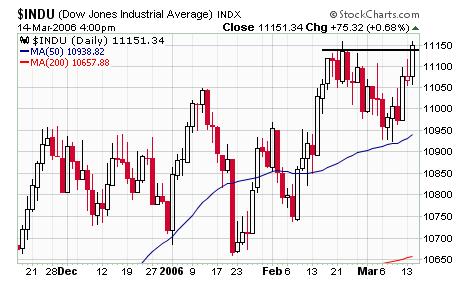
After days and weeks of moving inside a tradingrange the markets yesterday decided to go up closing near a few year's highs. Allthough the US markets hesitating the last weeks there was in fact no sign of hesitation on the European markets: they are up in a trend starting from november last year to all time highs recently.


Yesterday I found a book which tittle immediately decided me to order it: Chance: A Guide To Gambling, Love, The Stock Market, & Just About Everything Else. I will report about it when read and if as interesting as the tittle suggests. Probability being a subject to many fields including markets and science.


Senin, 13 Maret 2006

PARDO AND SYSTEMTRADING

I read an interesting article from Robert Pardo: some quotes here without comments. It speaks for itself.

About optmization:

"A lot of people will say, “Let’s try some moving average idea, and optimize and see what we come up with.” They may optimize and find a few models that look really good and completely ignore the fact that most of the rest look pretty bad. I don’t consider optimization to be the way to find if a model is good."

About random trading:

"Think about it. If you buy or sell off the flip of a coin, and you know how to manage your risk and your profit, you should be able to make something. I have a former client who had determined, prior to starting with a system, that he would some make money even with a random trade selection. He called it a money management system—I’m not sure that’s what I would call it.

At any rate, you have to ask yourself why people lose so much money trading futures and stocks when by random selection, you should be able to get a fairly even mix of wins and losses. Most people don’t ask that question, but it’s a good question to ask."


About market characteristics and differences:


"Would you also like to see confirmation in other markets?
I’m a little bit different than a lot of people on that count.Let’s say somebody came to me and said “I’ve got a bunch of different models that trade a bunch of different markets, and they’re all different, but they’re all really great.” If I looked at the models and saw they were sound, it wouldn’t bother me a great deal that they wouldn’t work in other markets. Not as long as I felt they were sound in the market they were designed to trade. Individual market characteristics do exist."


About targets and profits:


"With the systems I’ve used over the years, targets have made the models perform less profitably. What you might find is, a model that trades a great deal and is highly accurate could be made more accurate by targets. If you’ve got a model trading 60 percent profitability and it’s a good model, the targets might add 5 to 10 percent to it. So then you’re right seven times out of ten, and for a lot of people, that’s a big difference. They really like being right that often. But that’s another reason people don’t trade well. They’re more interested in being right than they are in just making money."


About accuracy:


"I’ve never really cared about accuracy in a model. A lot of people do, and obviously,the more accurate the better, but I’ve never made that a primary focus in building a model. The models that my current platform started out with were in the area of 45 to 48 percent accurate. They still made a lot of money because they let profits run, and the losses were very manageable. It’s a great irony to me that with no effort to get accuracy, my current models are in the 60 to 65 percent accuracy range."


Sabtu, 11 Maret 2006

Pros And Cons Of Credit Cards

Credit cards are very convenient. There's no need to carry any
cash; you can just take a credit card with you to the shop and
charge for your shopping.

When you shop on the Internet or over the phone, it's the only
good way to make purchases online. This is more convenient than
posting a cheque for payment. Like anything convenient, though,
having credit cards have its cons.

Not Keeping Track of Your Shopping Charges May Land You in
Trouble.

When you walk into that shop and hand over the card, you don't
pay cash rightaway. This can mean that as you do not see less
money in your purse or wallet, you may lose track of how much
you've spent.

Everyone has a tendency to underestimate what they spend, and
smaller amounts can add up quickly on a credit card without you
even noticing. It's like taking the way phone bills work and
applying it to everything you buy - and that can't be a good
idea.

Also, imagine the scenario if you have more than one credit
card. You will have to consolidate your charges on all of them
as well as those on your debit cards to derive your total
spending for the month.

You May Pay More Interest than Earn Interest.

The moment you run an outstanding balance, you're paying the
credit card company interest. You're also paying your credit
card bill as soon as you get your wages, so you may not have
the chance to earn any interest from your bank balances.

You Charge More to Your Credit Cards to Earn More Reward
Points.

The more debt you show you can pay back, the more credit card
companies will offer to you in terms of limit and cash
advances. The offers are so attractive that sometimes, it's
tempting to apply for more than one credit card. Credit card
companies also try to make you charge more to credit card by
awarding you reward points. The result is that you end up
spending more as you get enticed by lucky draws, discounts for
shopping, etc.

But Credit Cards If Used Wisely Can Be Useful.

When you need money in an emergency and you just don't have
any, there's no doubt that credit cards can be useful. They are
also a very useful way of proving to credit rating agencies that
you can handle debt, and this may be taken into consideration
when you apply for car loans or a mortgage.

Just remember that whenever you handle credit cards, you've got
to learn how to manage your finances. Keep your loans to a
minimum, and you will be in greater financial health.


About The Author: Elaine Lim used to be a research analyst from
a bank and now hopes to share her expertise through publishing
information on consumer credit. She hopes to help others in
their financial planning, debt management and credit repair.
For more free tips and resources, please visit
http://www.credit-cards-eguide.com .
=============================

http://www.debt-elimination-program-reviews.com/scams.html

Bill Consolidation: Freedom From Debt?

Stated simply, bill consolidation is getting loan to pay for
other loans so that the borrower is left with only one loan to
finance. Debt consolidation is a step taken by borrowers for
the advantages it may allow like lowered interest rates and
focusing his payment to a single loan.

This often takes placing a property as collateral. When
collateral is guaranteed the interest gets lower because the
risk to the lending company is decreased. When the borrower
fails to meet his obligations, the lending company forecloses
the property as payment for the debt.

People with multiple credit cards often resort to debt
consolidation. Carrying multiple credit cards is almost
surefire formula to carrying high interest rates. Credit cards
are one type of an unsecured loan. As such, credit cards carry
high interest rates and people with multiple credit cards are
often tempted to spend more than they earn.

One good way of solving this is through debt consolidation.
Secured loans from the bank or a lending company (one that is
covered by collateral) have less interest rates than the
unsecured loans for credit cards. Paying then all his credit
cards from a secured loan from the bank enables the borrower of
saving from the lowered interest rate. As mentioned, this is a
good way of doing it, if the habit of spending more than what
one earns is not changed. The process starts again and the
interest rates will soon start to climb, sometimes, worse than
it was resulting to foreclosure of properties.

There are many ways to consolidate debt. There are for example
the student's consolidation loans and the home finance debt
consolidation. But no matter how it is termed, debt
consolidation is little more like transferring one unsecured
loan to another unsecured loan. The debt is still there and
most people thought that by consolidating the loan, something
has already been done. Again, nothing has been done if the
habit that started it all is not resolved.

A better way to real freedom from debt is, when the debt
consolidation has been done and is working, have a plan and
stick to it. One of the generic approaches to that are the
obvious:

Do not spend on that one single credit card the way you were
spending when you have many. This seems to be very obvious and
so people who have consolidated their loans starts out fine.
After a while, the temptation to spend on loans starts. One of
the many reason is that the interests are lowered, the other
one is by habit. So once the debt consolidation is on, have the
plan not to spend on the things that you can live without and
stick to it.

Then, have a plan to pay for the loan that was secured with
collateral. About 80% of the time, people who consolidated
their loans dos not have a plan to assure the payment for the
loan with an extra job and other ways of generating extra
income. When emergencies strikes, the most convenient way is
again to resort to additional lending and the debt grows back
over time, higher interests are charged and the cycle
continues.

The best way to get out of debt and gain back that freedom is
to consolidate and then have a plan that one can stick to. No
amount of loan consolidation will work if the habit that placed
one in debt is not avoided.


About The Author: Robert Thatcher is a freelance publisher
based in Cupertino, California. He publishes articles and
reports in various ezines and provides bill consolidation
resources on http://www.about-bill-consolidation.info

Getting A Loan If Your Credit Is Bad

When you're learning about something new, it's easy to feel
overwhelmed by the sheer amount of relevant information
available. This informative article should help you focus on
the central points.

Bad credit is the worst type of credit that you could ever
have. Imagine all the doors that good credit opens and then
imagine them being slammed in your face. This is the reality of
bad credit and many people are living this reality even as you
read this. You might even be one of these people. If you are,
you should already realize how frustrating this kind of a
lifestyle can be. You have to pay the highest interest rate
possible on credit cards and you are constantly denied for
loans. You can't live a prosperous life with such financial
impediments standing in your way.

If you are stuck in this type of financial rut, you are in need
is some good old fashioned credit repair. You need the best help
you can find to improve your credit rating. The sooner you
repair your credit score, the sooner you can be rid of the bad
credit curse that has been plaguing you for so many years.

If your bankruptcy facts are out-of-date, how will that affect
your actions and decisions? Make certain you don't let
important bankruptcy information slip by you.

Why should you be stuck in financial hell? Stop dealing with
bad credit. You can improve your credit by acting more
responsibly with your money and living within your means. With
a little help, you will learn how to pay bills on-time and how
not to spend more than you can afford to. Even though there are
lenders out there who will agree to approve your high risk loan,
they will charge you an insanely high interest rate. You don't
want to be in more debt than you have to be in, so you want to
find a lender that specializes in bad credit personal and
business loans.

Although it may seem like your credit will forever be screwed
up when your credit is bad, a bad credit loan may help to
establish some good credit. As long as you can make your
payments every month, you will begin to build your credit back
up again. Everyone makes mistakes, but you don't have to suffer
for your entire life because of them. At least not now that they
have bad credit loans there to help you out.

To find a lender that will guarantee you approval, you have to
search online. It is the only way to do it these days and you
can get some real help from real people like you who have used
the service before. When you search in person you are much more
likely to be denied or approved for a ridiculously high loan
that you could scarcely pay back. By going online lenders will
fight for your business and you will end up not only being
approved by several different lenders, but will find lower
interest rates as well.

Don't limit yourself by refusing to learn the details about
bankruptcy. The more you know, the easier it will be to focus
on what's important.


About The Author: James Mahony is the founder of
http://www.thecreditsource.com - A site dedicated to Credit
Repair Free Credit Repair Guide
http://www.creditcardapprovals.com
http://www.articlesforwebsitecontent.com

Senin, 06 Maret 2006

QUOTATIONS ABOUT TRADING AND PERFECTION

A boring and no trading day on BUND and DOW, some quotations I saw today:
From TaylorTree:

Trading cannot be taught...it has to be caught. By that I mean you must have a perceptive nature. Without it, buy a system and execute it mechanically."

"I've had experience with this problem (self-sabotage). In short, I found if I had a goal that my self-concious believed was not doable, then I'd self-sabotage my trading. Once I realized this and changed my goals, the self-sabotage stopped."

"If you want to remain emotionless during trading, concentrate on the process and let the outcome happen."

From: Daily Speculations:

"I have traded continuously for some 10,000 consecutive days, but never had a single fully satisfactory one. Yesterday was no exception. Among other things I did not get out of all the positions I wanted to at the close, I allocated much too much of my capital to a certain search engine stock powered by executives too smart by half, and I suffered from faintheartedness the previous day when I should have taken out the cane but instead merely used a walker"

"Perfection is an ideal to aspire to; once you make it the standard to live by, you're doomed to be dissatisfied, if not downright unhappy"


Kamis, 02 Maret 2006

The Fair Credit Reporting Act (FCRA) And You

Your credit report gets viewed by other people besides credit
grantors. Potential employers and insurance companies can deny
you employment, auto and home owner's insurance based on your
credit report. Understand your rights protected by The Fair
Credit Reporting Act.

No matter what many credit counseling scam artists may try to
tell you, no one can legally remove any information that is
up-to-date and accurate from your credit report. They can't do
it, and you can't do it yourself. However, you CAN request an
investigation of anything you find in your credit file that you
believe to be either incomplete or inaccurate. That is perfectly
legal, and can be done at NO cost to you. In fact, anything that
a credit repair company offers to do for you can be done
yourself, generally free or for a nominal fee.

In fact, there's a law that guarantees it. It's called the Fair
Credit Reporting Act (FCRA). Under provisions of the FCRA, you
are entitled to receive a free credit report if a company
denies your application for credit, employment, or insurance.
You must ask for the report within sixty days of the refusal,
and the company must tell you which credit reporting company
they used, and provide you with their address and phone number.
(The three nationwide companies most often used are Experian,
TransUnion, and Equifax.)

The FCRA has made it mandatory for consumer credit reporting
companies to correct information that's incorrect or
inaccurate. To correct inaccuracies, you must first contact the
reporting company, in writing, telling them which information is
incorrect or incomplete. In your correspondence, include copies
of documents that will verify your claim. (Don't send
originals!) Clearly detail why each piece of disputed
information is incorrect, and then ask that the inaccurate
information be either corrected or removed from your file
completely. It's generally worthwhile to include a copy of the
credit report itself, with each disputed item circled.

Once you've put your package together, send it to the company
in question by certified mail, indicating "return receipt
requested." That will allow you to be certain that the company
received your package. Also keep copies of everything for
yourself, of course!

The FCRA makes it mandatory that the reporting company
investigate each item you have disputed, often within thirty
days, unless they consider your dispute to be unworthy of
researching further. By law, they must also forward everything
you have provided them on to whatever company or organization
initially provided the disputed information in the first place.
That provider must then review and investigate the situation and
report back to the reporting company. If the provider has
mistakenly provided inaccurate information, they must correct
it with all three major reporting companies.

Once the investigation has been completed, the FCRA mandates
that the reporting company must provide you with the results,
in writing, and a free copy of the report if the investigation
resulted in a change in your credit report information. You may
also request that a copy of the amended credit report be sent to
anyone who may have received the disputed report during the
previous six months. If the report was given to potential
employers, you have a right to request that a corrected report
be sent to any employer who may have received the inaccurate
report during the past two years.

Copyright © Jeanette J. Fisher


About The Author: Jeanette Fisher teaches how to get out from
under credit card debt, how to use credit to make money, and
six ways to build strong credit to finance your first home and
multiple investment properties. For free credit advice and free
ebook "Credit Tips for Mortgage Financing," see
http://worryfreecredit.com

Rabu, 01 Maret 2006

MARKETS UPDATE

Markets closing februari still in their tradingranges, although at the end of last week and the beginning of this one's the markets seemed to break these levels to find their way up. Yesterday's pull back maybe led by Google's drop.


From this point I still expect the markets to test the lower boundaries of their trading ranges,as I stated before.


There has been so much said about Google lately and also on the clarifications Google's chief financial officer, George Reyes did yesterday, I rest it here, but
this link makes it very clear that Google may have problems.


Related Posts Plugin for WordPress, Blogger...